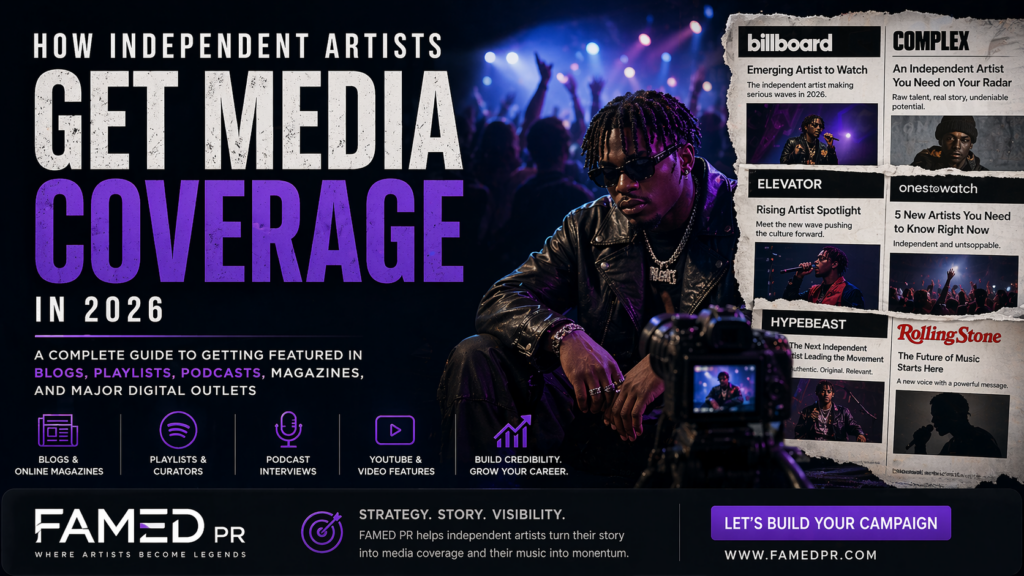
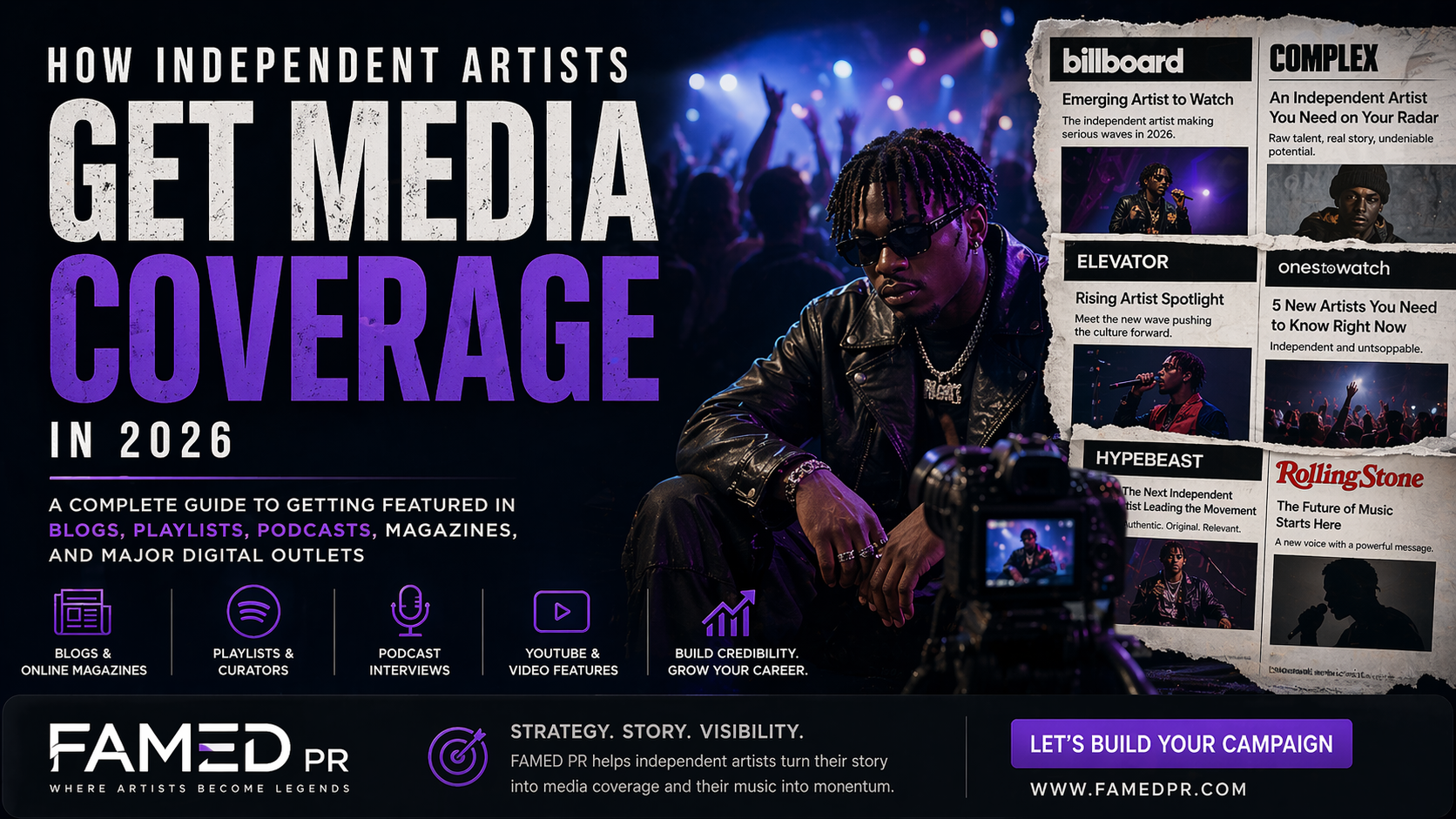
Media coverage is no longer about luck, cold-emailing random blogs, or waiting for a label to open doors. In 2026, the artists getting featured are the ones who understand branding, timing, narrative, and professional presentation.
Media coverage is no longer about luck, cold-emailing random blogs, or waiting for a label to open doors. In 2026, the artists getting featured are the ones who understand branding, timing, narrative, and professional presentation. The good news is that independent artists can absolutely get coverage today. The better news is that the process is far more learnable than most people think.
The media landscape has changed dramatically. Instead of a few giant gatekeepers controlling access, there are now thousands of blogs, digital magazines, playlist brands, YouTube channels, Substack newsletters, podcasts, and niche creators covering music from different angles. That creates more opportunity, but it also creates more noise. Editors, curators, and writers are overwhelmed. They receive huge volumes of pitches, and most of them are forgettable within seconds.
That is why artists can no longer afford to approach press casually. You are not simply asking someone to “check out your song.” You are asking them to spend time, attention, and editorial space on your story. That means you have to give them a reason. The artists getting covered in 2026 are the ones who look organized, sound credible, and understand how to position their music as part of a bigger narrative.
Need Real Press Support For Your Next Release?
FAMED PR helps independent artists build press-ready narratives, target the right outlets, and present themselves professionally to blogs, playlists, podcasts, and digital media.
Book a Consultation View PR PlansWhat Gets Artists Ignored
Generic outreach, weak presentation, no clear story, no release plan, and unrealistic expectations.
What Gets Artists Covered
Clear positioning, polished assets, targeted outreach, timing, and a compelling reason to publish now.
Start With The One Thing Most Artists Skip: Your Story
Before pitching a single outlet, you need to answer three questions clearly. Who are you. Why should anyone care. Why now. Those questions sound simple, but they are where most artists fall apart. Too many musicians rely on vague phrases like “upcoming artist,” “next big thing,” or “versatile sound.” Editors have seen those phrases thousands of times. They do not create curiosity. They do not create urgency. They do not create coverage.
A good artist story is specific. Maybe you are building from a real personal struggle. Maybe your release ties into your city, your culture, your audience, or a moment that is already relevant. Maybe your angle is consistency, reinvention, discipline, growth, or a project with unusual visual or conceptual depth. What matters is not sounding dramatic. What matters is being memorable and easy to understand. Media outlets cover narratives far more often than they cover music in the abstract.
Pro tip: If your pitch cannot explain your story in two or three sharp sentences, your brand is probably not clear enough yet.
Your EPK Still Matters, But It Needs To Feel Current
A lot of artists assume EPKs are outdated. They are not. What is outdated is the bloated, awkward version of the EPK that looks like it was built for desktop ten years ago. In 2026, a strong EPK is clean, visual, and easy to scan on a phone. It should include a short bio, high-quality photos, streaming links, standout quotes or achievements, and clear contact information. Anything beyond that should support the story rather than bury it.
Think of your EPK as proof that you are ready. An editor should be able to open it and immediately understand who you are, what you are promoting, and how to access the assets they need. If they have to dig for photos, search for links, or guess how to contact you, you are making their job harder. Artists without a solid EPK often get dismissed before the music even has a chance to speak.
A Strong Artist EPK Should Include
- A short bio, ideally around 150–250 words.
- High-resolution photos that match your brand.
- Links to your music and videos.
- Relevant press quotes, milestones, or achievements.
- Easy-to-find contact details.
Timing Is What Turns A Pitch Into A Publishable Story
One of the biggest mistakes artists make is reaching out for press with no event, no momentum, and no calendar logic behind the campaign. Media outlets need a reason to care now. A single release, an album launch, a video premiere, a live show, a tour announcement, a viral moment, or a major milestone can all create the kind of timing that makes a pitch feel relevant. Without that timing, even a talented artist can come across as premature.
The strongest campaigns are usually built around a release schedule rather than around random bursts of outreach. That is one reason professional PR support matters. Strategy is not just about sending emails. It is about aligning your story, your assets, and your timing so that editors receive something that makes sense editorially. A well-timed campaign feels like an opportunity. A badly timed one feels like a favor request.
Build A Campaign Before The Release Date
If your song, video, EP, or album is coming soon, FAMED PR can help you organize the story, assets, and timing before the campaign window closes.
Start Your Campaign Get FREE PR GuideTargeted Media Lists Beat Mass Emailing Every Time
Artists often think bigger is better and blast the same message to hundreds of outlets. In reality, that is one of the fastest ways to look unprofessional. Precision beats volume. A carefully chosen list of 30 to 50 relevant outlets can outperform a giant list of 500 random contacts because relevance determines response.
Good media targeting takes genre, audience, region, platform type, and editorial style into account. A regional blog, a niche playlist brand, a podcast host, and a culture writer may all be valuable, but not for the same reason and not with the same pitch. This is where many artists waste time. They assume outreach is just about effort. It is actually about fit.

Editors Want Clarity, Not Hype
In 2026, editors still want many of the same basics they have always wanted. Clean subject lines. Concise pitches. Clear value for their audience. Professional follow-ups. Easy access to assets. They do not want massive attachments, long emotional essays, or exaggerated claims with no evidence behind them.
This is one of the areas where artists sabotage themselves most. They confuse passion with communication. They believe that if they explain how hard they worked or how badly they want an opportunity, the editor will be persuaded. That is usually not how it works. Editors are not looking to be convinced that your dream matters. They are looking to determine whether your story and music fit their platform and their audience.
Editors Want
Concise outreach, strong subject lines, easy access to links, and a clear reason to publish.
Editors Do Not Want
Desperation, clutter, giant attachments, overhype, and generic copy-paste messaging.
Social Proof Matters More Than Most Artists Realize
You do not need millions of streams to get coverage, but you do need signs of life. Editors and curators increasingly look at streaming numbers, social engagement, fan growth, and geographic traction when deciding whether an artist already has some momentum worth amplifying. Even modest numbers can help when they are framed correctly. Consistency often matters more than a one-time spike.
This is why press and marketing should not be treated as separate worlds. A healthy digital footprint supports your PR outreach, and good PR makes your digital footprint look more credible. When these elements reinforce each other, artists stop looking like they are asking for attention and start looking like they are building something real.
Coverage Is Bigger Than Blogs Now
Modern media coverage is not limited to blogs. Smart artists pursue multiple layers of visibility, including Spotify playlists, podcast interviews, YouTube features, curator shoutouts, and newsletter placements. Each one expands your credibility in a different way, and together they create the feeling that your brand is moving.
That broader view is important because different platforms reach different audiences at different stages of attention. A playlist can generate discovery. A podcast can build trust. A blog feature can strengthen your Google footprint. A YouTube interview can show personality. Good PR in 2026 is about building a complete perception, not chasing one lucky article and hoping everything changes overnight.
Paid And Earned Media Both Have A Place
There is still confusion around paid versus earned media. Paid placements can help generate exposure faster. Earned media builds trust and editorial credibility over time. The strongest campaigns usually combine both in a transparent way. The key is honesty, proper labeling, and choosing placements that support the artist’s long-term brand instead of just offering a quick vanity boost.
Artists do themselves a disservice when they treat press as either magical or fake. It is neither. It is a professional tool. Used correctly, it can improve trust with fans, help attract collaborators, strengthen sponsorship conversations, and make booking opportunities easier to win.
What A Real PR Campaign Usually Includes
- Strategy and positioning session.
- Narrative development.
- Media list building.
- Pitch writing and outreach.
- Follow-ups and communication.
- Reporting and campaign review.
Why Agencies Still Matter
DIY PR works for some artists, especially when they are organized and willing to learn the process. But agencies still matter because they bring relationships, credibility, speed, and strategy to the table. They also help artists avoid common mistakes and keep campaigns focused over time. PR is rarely about one article changing everything. It is a long-term brand-building discipline.
That long-term mindset is what separates serious artists from artists who burn out after one release. Press should not be treated as a random bonus. It should be treated as an asset that compounds. The more credible your media footprint becomes, the easier it is to build on it with future releases, partnerships, and opportunities.
Where FAMED PR Helps Artists Get Media Coverage
FAMED PR helps artists shape the story, prepare the materials, and build campaigns that look professional before the first pitch goes out.
Ready To Build Your Next Press Campaign?
FAMED PR helps artists shape their story, organize their assets, target the right media, and launch campaigns that feel professional from day one.
Contact FAMED PR View PR Plans View ServicesFAQ
Can Independent Artists Really Get Media Coverage Without A Label?
Yes. Independent artists can absolutely get coverage in 2026, but they need strong positioning, good timing, professional assets, and targeted outreach rather than random mass emailing.
What Should Be In An Artist EPK?
A strong EPK should include a short bio, high-resolution photos, music links, any notable press quotes or achievements, and clear contact information.
Is One Article Enough To Change An Artist’s Career?
Usually no. PR works best as a long-term strategy that builds trust, visibility, and momentum over time.

Natalia is a dedicated PR specialist, publicist, and journalist with a profound passion for the music industry. Her academic background includes a degree in Public Relations from The New School in New York and a journalism course at Michigan State University. Beyond her editorial responsibilities, Natalia organizes rap events and contributes to Wikipedia as an author and editor, focusing on hip-hop content. Residing in Miami, she is committed to discovering and promoting new talent, helping artists gain exposure through online marketing and publications.