
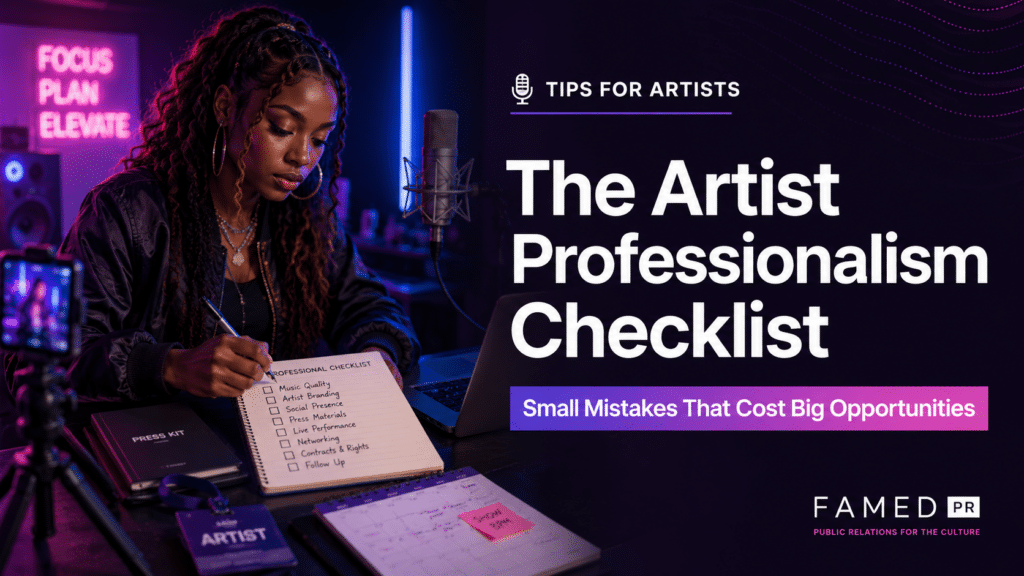
The Artist Professionalism Checklist: Small Mistakes That Cost Independent Musicians Big Opportunities
Talent can open the door, but professionalism determines whether the industry wants to keep working with you. Here are the habits that separate serious artists from artists who are not ready yet.
Every artist wants to believe the music speaks for itself. In a perfect world, that would be enough. The strongest song would always win, every opportunity would be based only on talent, and nobody would care about emails, timing, visuals, follow-through, or how an artist treats people behind the scenes.
In the real music business, that is not how it works. Before a blogger writes about an artist, before a promoter books them, before a publicist pitches them, before a DJ supports them, before a manager takes a meeting, and before a fan spends money on a ticket, people are forming opinions from everything around the music.
A late arrival, an unfinished press kit, a messy email, a weak flyer, a poor attitude at soundcheck, a missing bio, a confusing link, or a last-minute change can make an artist look unprepared even when the music is good. That is why professionalism matters. It does not replace talent. It protects talent and gives it a better chance to be taken seriously.
FAMED PR Artist Note: If you are preparing a release, building your brand, or trying to turn attention into real visibility, your presentation matters. A strong rollout is not just about dropping music. It is about showing the industry that you are ready for press, fans, bookings, interviews, and bigger opportunities.
1. Being Late Sends The Wrong Message Before You Even Arrive
Being late is one of the simplest ways to damage your reputation. Some artists treat lateness like it is part of the lifestyle, but people working behind the scenes rarely see it that way. To an engineer, lateness means wasted studio time. To a promoter, it means a delayed schedule. To a videographer, it means extra production pressure. To a journalist, it means the artist may not respect the interview.
When you arrive late once, people may forgive it. When you make it a pattern, people start to see you as unreliable. That reputation can follow you from one room to another. Music is a relationship business, and professionals talk. If people feel that working with you means stress, delays, excuses, and confusion, they may choose another artist next time.
Showing up early does not cost money. It does not require a major label. It does not require a famous manager. It only requires discipline. For independent artists, that discipline can become a real advantage because reliability is rarer than many people think.
Arrive Early
Being early gives you time to settle in, solve small issues, and show everyone that you respect the opportunity.
Confirm Details
Know the time, location, contact person, files needed, payment terms, and expectations before the day arrives.
Protect Your Name
Your reputation is built through repeated behavior. Every session, show, shoot, and interview adds to it.
2. Being Unprepared Makes Good Music Look Less Serious
An artist can have talent and still look unprofessional if they come unprepared. This happens in studios, video shoots, interviews, meetings, live shows, and PR campaigns. The artist may have a good idea, but if the files are missing, the lyrics are unfinished, the release date is unclear, the photos are weak, or nobody knows the campaign angle, the opportunity becomes harder to execute.
Preparation does not mean every creative decision has to be locked in forever. Music still needs room for feeling, instinct, and experimentation. But the people around you should not have to build the entire foundation from scratch while the clock is running. A producer should not have to guess the direction of the song. A publicist should not have to chase basic release information. A journalist should not have to search for a working link. A promoter should not have to ask five times for your stage setup.
The more prepared you are, the easier it is for others to help you. That is one of the biggest differences between an artist who is talented and an artist who is ready.
3. Poor Communication Can Kill Momentum Quietly
Bad communication is one of the most common problems independent artists create for themselves. Some artists disappear for days when a quick answer is needed. Some send scattered messages across Instagram, text, email, and DMs instead of keeping information organized. Others change plans at the last minute, forget to send materials, or respond only after the opportunity has cooled down.
People in music move fast. Writers are working on deadlines. Promoters are filling calendars. Curators are reviewing dozens or hundreds of submissions. Publicists are coordinating multiple moving parts. If your communication creates extra work, you may lose the opportunity to someone easier to deal with.
Clear communication makes you look serious. A professional artist knows how to answer directly, provide the right links, send clean materials, and confirm details without making the other person chase them. That does not mean you need to sound robotic. It means you need to make the process easy.
Go From Overlooked To Overbooked
FAMED PR helps independent artists build visibility through press releases, media placements, interviews, EPKs, campaign strategy, artist branding, and promotional rollouts.
Start Your Campaign View PR Plans4. Long, Confusing Emails Make Industry People Tune Out
A strong pitch should make the next step obvious. Unfortunately, many artist emails do the opposite. They are too long, too vague, too emotional, or too focused on name-dropping instead of explaining what the artist is actually asking for.
If you are pitching media, DJs, playlist curators, booking contacts, or PR agencies, your email should answer the basics quickly. Who are you? What are you promoting? Why does it matter now? Where can someone listen? What do you want from the person receiving the message?
Artists often believe that adding more information makes them look more important. In reality, the strongest pitch is usually focused and easy to scan. You can always provide more details later. The first goal is to make someone interested enough to reply, listen, or move the opportunity forward.
5. Weak Visuals Can Damage The First Impression
Before people hear the song, they often see the artist first. They see the cover art, press photo, flyer, YouTube thumbnail, Instagram profile, website, EPK, or promo graphic. If those visuals look cheap, rushed, blurry, generic, or confusing, the artist may look less serious before the music even gets a fair chance.
Visual branding does not have to be expensive to be effective. A clean photo, readable text, consistent colors, strong cover art, and organized presentation can already make an artist look more polished. What hurts artists most is not simplicity. It is carelessness.
If you are asking the public to take your music seriously, your visuals should support that message. Cover art should look ready for streaming platforms. Flyers should be easy to read on mobile. Photos should be high-resolution. Your bio and links should be organized. Your EPK should make you look like someone who is ready for press, bookings, and business.
6. Bringing Too Many People Can Make You Look Unfocused
A support system is important, but not every room needs an entourage. When artists bring too many friends to studio sessions, meetings, video shoots, backstage areas, or business conversations, the energy can quickly become distracting. People who are not helping the work get done can slow down decisions, interrupt direction, create pressure, or make the artist look less focused.
There is a difference between a team and a crowd. A manager, assistant, stylist, videographer, makeup artist, security person, or creative director may have a clear role. A group of friends with no purpose can create confusion.
As opportunities get bigger, the rooms become more professional. Artists need to understand when to bring people and when to show up focused. The goal is not to look surrounded. The goal is to look prepared.
7. Bad Stage Etiquette Can Hurt Future Bookings
A live show is not only about how you perform. It is also about how you handle the full experience. Artists who miss soundcheck, ignore set times, argue with staff, take too long to set up, crowd the stage before another act clears out, or fail to leave the stage properly after performing can frustrate promoters and venue teams.
This matters because bookings depend on trust. A promoter may love your energy but still hesitate to book you again if your set caused problems. A venue may respect your music but avoid bringing you back if your team was difficult. A DJ may like your record but remember that your files were disorganized or your timing was off.
Professional stage etiquette is simple: know your set length, send clean performance files, arrive for soundcheck, follow instructions, respect the crew, give full energy, and exit smoothly when your time is up. The audience may not notice every detail, but the people who book shows absolutely do.
8. Disrespecting Staff, Crew, Or Fans Is A Serious Mistake
How an artist treats people behind the scenes says a lot. The sound engineer, photographer, door staff, security team, videographer, bartender, runner, assistant, blogger, and opening act may not all have visible power, but they are part of the ecosystem that helps music move.
Some artists make the mistake of only being respectful to the person they think is important. That is short-sighted. People remember who made the night easier and who made it harder. A respectful artist can build goodwill quickly. A disrespectful artist can damage their name just as fast.
Fans deserve that same respect. Whether the room is packed or small, people gave you their attention. Some paid money. Some traveled. Some shared your music. Some are seeing you for the first time. Treating fans like they are disposable is one of the fastest ways to weaken long-term support.
9. Exaggerating Success Can Make You Look Less Credible
Confidence is part of being an artist, but exaggeration can backfire. If an artist claims to be bigger than they are, inflates numbers, overstates demand, or acts entitled based on hype that does not match reality, industry people usually notice.
There is nothing wrong with being in the early stages. Every established artist started somewhere. A small but engaged fanbase is valuable. A growing local audience is valuable. Consistent releases are valuable. Real progress is more impressive than fake status.
Instead of pretending to be a superstar, focus on presenting your real momentum clearly. Show what is growing. Explain your story. Highlight your strongest press, visuals, shows, audience response, and release strategy. Serious people can work with honesty. They are less likely to trust inflated claims.
Where FAMED PR Helps Artists Look More Professional
A strong public image is built through consistent presentation. FAMED PR supports artists with the materials, placements, and strategy needed to look ready for bigger opportunities.
10. Not Having A Professional EPK Makes Opportunities Harder
An EPK, or electronic press kit, is one of the most important tools for an artist who wants press, bookings, interviews, playlist consideration, radio support, or management conversations. A strong EPK gives people everything they need in one place: bio, photos, music links, videos, social links, press coverage, contact information, release details, and a clear artist story.
Without an EPK, artists often send scattered links and incomplete information. That creates more work for the person reviewing them. A journalist may need a photo. A promoter may need a short bio. A playlist curator may need the streaming link. A publicist may need a release angle. If those materials are missing or messy, the artist looks less ready.
A professional EPK does not just organize your materials. It tells people that you take your career seriously. It makes you easier to pitch, easier to book, easier to cover, and easier to recommend.
11. Waiting Until Release Day To Think About PR Is Too Late
One of the biggest mistakes independent artists make is waiting until the song is already out before thinking about promotion. By the time the release is live, the campaign window may already be shrinking. Press, playlists, interviews, videos, social content, visuals, and rollout strategy should be planned before the release date whenever possible.
A professional rollout gives the music a better chance to travel. The artist should know the single date, video date, cover art, bio angle, press target, content plan, ad budget, playlist strategy, and follow-up plan. If everything is rushed after the release, the campaign becomes reactive instead of strategic.
Artists do not need to have every detail perfect, but they should avoid treating promotion like an afterthought. The artists who look most prepared are usually the ones who start building the story before the public sees the final product.
FAMED PR Artist Professionalism Checklist
- Arrive early for studio sessions, soundchecks, interviews, video shoots, and meetings.
- Prepare your bio, press photos, music links, video links, social links, and release details in advance.
- Keep pitch emails short, clear, and focused on one specific request.
- Use clean cover art, readable flyers, strong photos, and consistent branding.
- Respect engineers, DJs, photographers, venue staff, writers, publicists, and fans.
- Bring only necessary people to professional settings.
- Know your stage setup, performance files, set length, and contact person before show day.
- Be honest about your current audience, numbers, and career stage.
- Create a professional EPK so people can easily cover, book, or pitch you.
- Plan PR before the release instead of waiting until the song is already out.
Professionalism Is A Career Multiplier
The good news is that most professionalism problems are fixable. You do not need a million-dollar budget to communicate clearly. You do not need a major-label team to arrive on time. You do not need a celebrity stylist to organize your visuals. You do not need a famous manager to treat people with respect.
Professionalism is a set of habits. Those habits make your talent easier to understand, easier to support, and easier to promote. When people trust you, they are more willing to recommend you. When you are organized, people are more willing to work with you again. When you present yourself clearly, your music has a better chance of being taken seriously.
For independent artists, that can be the difference between being overlooked and being considered for the next feature, playlist, interview, show, partnership, or campaign.
Ready To Look More Professional And Build Real Visibility?
FAMED PR helps independent artists sharpen their public image, build stronger campaign materials, and get in front of media platforms through strategic music PR and artist visibility campaigns.
Start Your Campaign Get FREE PR Guide Contact FAMED PRFinal Word
Music will always be the foundation, but the way an artist moves around the music can shape the entire career. People notice when an artist is prepared. They notice when the visuals are clean. They notice when emails are clear. They notice when the artist respects the room, the crew, the fans, and the opportunity.
The artists who last are not only the ones with talent. They are the ones who learn how to carry that talent professionally. If you want people to invest attention, press, money, bookings, and energy into your career, start by making it easy for them to believe you are ready.

Natalia is a dedicated PR specialist, publicist, and journalist with a profound passion for the music industry. Her academic background includes a degree in Public Relations from The New School in New York and a journalism course at Michigan State University. Beyond her editorial responsibilities, Natalia organizes rap events and contributes to Wikipedia as an author and editor, focusing on hip-hop content. Residing in Miami, she is committed to discovering and promoting new talent, helping artists gain exposure through online marketing and publications.